Bar owners and hosts blame the theme when a night flops. "We tried Disney trivia and it didn't work." Almost always wrong. The theme worked. The mechanics around it didn't. Two venues running the same Disney pack on the same night will see wildly different results, and the gap is execution.
This is what separates themed trivia that lands from themed trivia that flatlines.
Mechanic 1: Question depth has to match audience knowledge
The most common failure mode: questions are too easy or too hard for the room. Themed nights are especially sensitive to this because players self-select — they showed up because of the theme, which means they probably know more about it than average.
Working ratios for a themed night:
- 30% easy gimme questions (everyone gets these)
- 50% mid-difficulty questions (recall, common knowledge of the theme)
- 20% hard / deep-cut questions (rewards the superfan teams)
Skew the easy too high and players get bored. Skew the hard too high and casuals check out. The 30/50/20 mix is what professional pack writers target. DIY hosts almost always over-weight one side or the other.
Mechanic 2: Picture rounds aren't optional for themed nights
The picture round is the single most discussed part of a trivia night. On a themed night, it's also the centerpiece of the theme.
Examples that work:
- Friends: 10 stills from various episodes — identify the season.
- Disney: 10 villain silhouettes — name the movie.
- '80s: 10 album covers with title removed — name the album.
- Christmas: 10 Christmas movie scenes — identify the film.
Skipping the picture round on a themed night is like running a wedding without a first dance. It's the moment people came for. Hosts who DIY their picture round usually scrape Google Images at 5 p.m. on Tuesday and the result looks like it. Buy the picture round in the pack — the production quality of a pre-built picture round is significantly higher than what you'll cobble together.
Mechanic 3: The props rule (just enough, never too much)
Props are the difference between a "themed trivia night" and a "themed bar night with trivia." Both work, but the latter requires more investment.
Minimum viable props for any themed night:
- Themed table tents at sign-in
- One PowerPoint title slide with theme art
- Theme-specific drink special chalked on the board
- Theme music playing during halftime
Total cost: $0 to $30 if you DIY the printables. The packs from cheaptrivia ship with title slides and printable score sheets that are already on-theme.
Maximalist props (Halloween, Christmas, Disney big nights):
- Themed costuming for the host
- Decorations at every table
- Themed prizes (a toy lightsaber for Star Wars night, etc.)
- Photo backdrop for social
Maximalist props move the night from "trivia with a theme" to "an event you'll Instagram." Worth the $80-150 for big themed weeks (December, Halloween) and overkill for casual rotation weeks.
Mechanic 4: Pacing is more brutal on themed nights
Themed nights pull bigger crowds, which means more answer sheets to grade, more team names to read, more scoring confusion at halftime. If your standard 90-minute night runs lean, your themed night will run over by 15 minutes if you don't tighten up.
What to cut on themed nights:
- Long answer reads: say the answer once, briefly, no analysis.
- Standings reading: top 5 teams only, not all 14.
- Round transitions: 2 minutes between rounds, not 5.
- Tiebreakers: have a default tiebreaker question pre-loaded for instant use.
The 9 p.m. end time is the goal. Themed nights that run to 9:30 lose teams who came specifically for the theme and were planning a workday tomorrow.
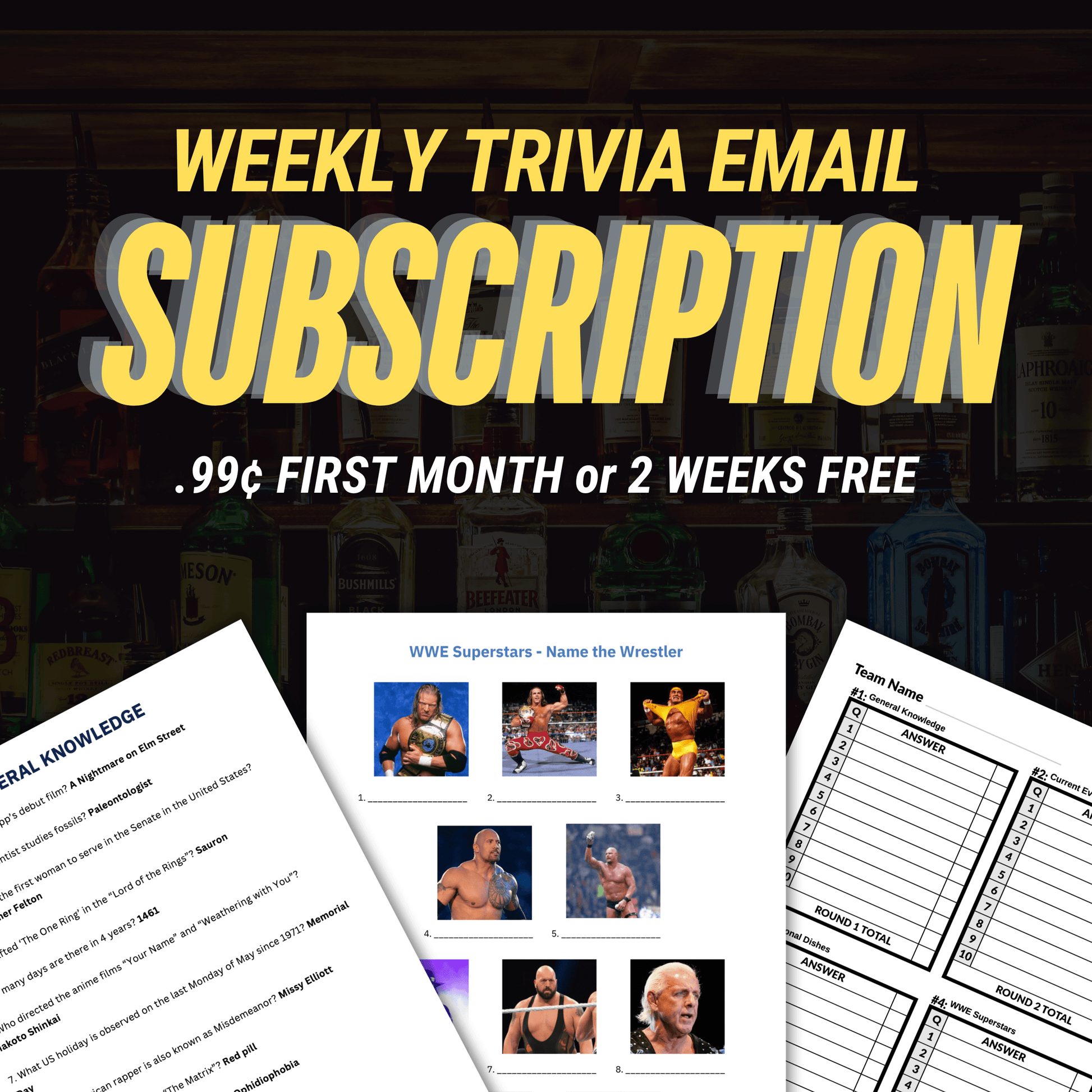
Weekly Trivia Subscription Service
Themed nights live or die on the question pack. The subscription delivers a different themed pack every Monday with picture round, host script, and a built-in difficulty mix.
Four traps that flatten themed nights
Trap 1: Too obscure
Hosts who pick a niche theme they personally love (1970s prog rock, vintage F1) end up with 12 superfans and an empty bar. Themes need to clear an 80% recognition threshold with the room.
Trap 2: Theme without commitment
Announcing "Star Wars Night" and then asking 5 Star Wars questions out of 40 is worse than not having a theme. Players showed up for the theme. Deliver on it — at least 70% of questions should be theme-direct.
Trap 3: Recycled questions across themed weeks
If you ran Friends trivia six weeks ago and you run it again with 60% of the same questions, your repeat teams will ace the night and walk. Buy fresh packs or rotate themes far enough apart that recall fades.
Trap 4: No upgrade in difficulty for fan-heavy themes
Friends, Disney, and Office trivia attract superfans who will dominate a generic question pack. Themed nights for these properties need harder questions than your general-knowledge weeks. The pack writers know this. DIY hosts often miss it.
The mechanic that matters most: pre-night preparation
Themed nights reward preparation more than general-knowledge nights do. Set aside 30 minutes the morning of:
- Test the projector / PowerPoint with the picture round.
- Print enough answer sheets for your expected headcount + 30%.
- Pick a tiebreaker question, write it on a sticky note for fast access.
- Brief your bartenders on the theme so they can chat about it with players.
- Check your audio in an empty room. Themed nights pull bigger crowds — more body absorption of sound means you need 20% more volume.
The hosts who do this run smooth themed nights. The hosts who don't run themed nights with a picture round that won't load and an audio cut-out in round 3.
The bottom line
Themes don't fail — mechanics do. The 30/50/20 difficulty mix, a real picture round, props that match the ambition, tight pacing, and pre-night setup. Get those right and any of the calendar themes will land. Get them wrong, and the best theme on the calendar will empty the room by round 3.