The trivia hosts who plan the year ahead beat the hosts who pick a theme on Monday afternoon. A 52-week calendar lets you batch-buy content, plan promotion six weeks out, and rotate themes so regulars don't burn out on the same Friends pack twice.
This is the working calendar. Theme by month, with the rules that govern when each one works.
The four rules that govern the calendar
- Don't fight the season. December is owned by Christmas. Don't run general knowledge in December — you'll lose to every venue running themed Christmas trivia.
- Don't repeat the same specific theme inside 8 weeks. Friends in March, Friends in May = same teams attend, same questions, attendance drops.
- Alternate broad and specific. A specific theme drives spikes. General knowledge is the baseline. Switching keeps regulars engaged.
- Tie themes to local events. March Madness, Super Bowl week, your city's marathon — if there's a calendar moment, ride it.
The 12-month calendar (4-week rotation)
Below is one full year of weekly themes for a Tuesday or Wednesday trivia night. Adjust dates by a week or two depending on your specific venue calendar.
January
- Week 1: Year in Review (last year's pop culture, news, sports)
- Week 2: '90s Nostalgia (a high-energy themed week)
- Week 3: General Knowledge
- Week 4: Movies (broad, easy to script)
February
- Week 1: Super Bowl week (sports + commercial trivia)
- Week 2: Romantic Comedies (Valentine's tie-in)
- Week 3: General Knowledge
- Week 4: Music (1960s-70s classics)
March
- Week 1: March Madness (college sports, brackets, history)
- Week 2: St. Patrick's Day (Ireland, U2, Notre Dame)
- Week 3: General Knowledge
- Week 4: '00s Pop Culture
April
- Week 1: Sci-Fi (Star Wars, Star Trek, Marvel)
- Week 2: Sitcoms (Seinfeld, Office, Friends rotated)
- Week 3: General Knowledge
- Week 4: Earth Day / Geography
May
- Week 1: Star Wars (May 4 anchor)
- Week 2: '80s
- Week 3: General Knowledge
- Week 4: Memorial Day weekend — military movies / classic Americana
June
- Week 1: Disney
- Week 2: Summer Movies (blockbusters)
- Week 3: General Knowledge
- Week 4: Music Festivals / Concerts
July
- Week 1: Independence Day Americana
- Week 2: Road Trip / Geography
- Week 3: General Knowledge
- Week 4: Summer Hits (music)
August
- Week 1: Back-to-School (history of education, college movies)
- Week 2: '90s
- Week 3: General Knowledge
- Week 4: NFL preseason / sports prep
September
- Week 1: NFL kickoff
- Week 2: Friends (Thursday-night sitcom era anchor)
- Week 3: General Knowledge
- Week 4: Fall TV Premieres
October
- Week 1: Horror Movies (early Halloween push)
- Week 2: '80s Horror
- Week 3: Halloween Costumes & Pop Culture
- Week 4 (Halloween week): Halloween Special, all-themed
November
- Week 1: Thanksgiving (Macy's parade, food, football)
- Week 2: Friends Thanksgiving Episodes
- Week 3 (Thanksgiving week): Thanksgiving Special
- Week 4: Black Friday / Consumer Culture
December
- Week 1: Christmas Movies (Elf, Home Alone, Wonderful Life)
- Week 2: Christmas Songs & Carols
- Week 3: Holiday Around the World
- Week 4: NYE prep / Year in Review
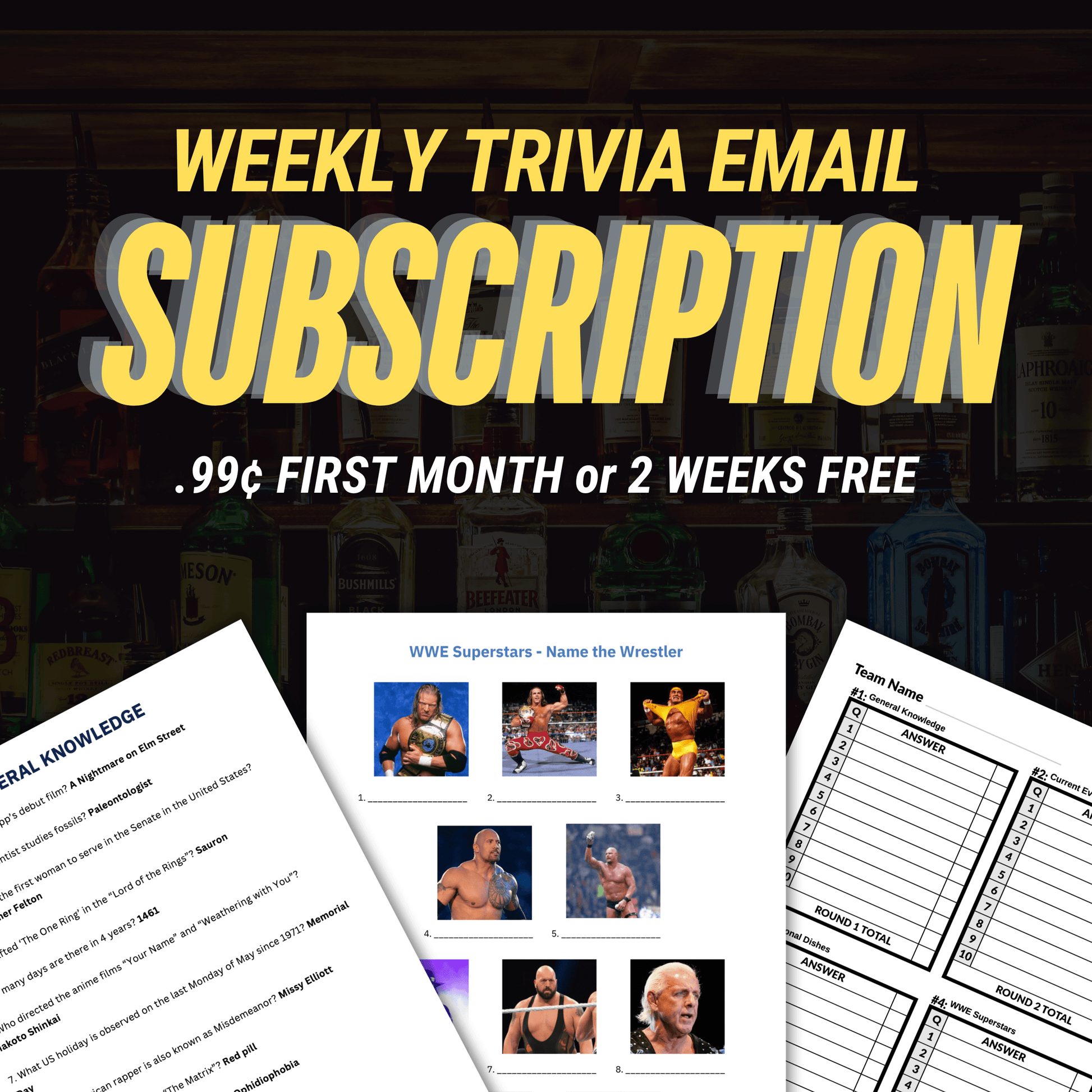
Weekly Trivia Subscription Service
52 weeks of themes is a lot of content. The weekly subscription delivers a fresh pack every Monday with 4 rounds, picture round, and a host script — a different theme each week.
The themes that consistently drive the biggest crowds
Not all themes pull equal headcount. Across hundreds of bar trivia nights, the same handful sit at the top of the leaderboard for attendance lift over baseline:
| Theme | Typical headcount lift over baseline week | When to run it |
|---|---|---|
| Christmas (any sub-theme) | +40-60% | December weeks 1-3 |
| Halloween / horror | +30-50% | Last 2 weeks of October |
| Friends | +25-40% | Anytime, not back-to-back |
| Disney | +25-40% | June weeks, family-friendly |
| '90s nostalgia | +20-35% | January, August |
| Star Wars | +20-30% | May 4 anchor |
| Super Bowl week sports | +15-25% | Week of Super Bowl |
| '80s | +15-25% | May, October |
| Thanksgiving | +15-20% | Week of Thanksgiving |
| General knowledge | Baseline | Off-weeks |
The pattern: emotionally loaded themes (holidays + nostalgia) drive the biggest spikes. Niche or educational themes underperform unless your audience is unusually specialized.
How to plan and promote the calendar
- Print a six-month theme calendar at the door. Players plan around it. Regulars commit to the themes they want to attend.
- Promote each theme on social 10-14 days out. The theme is the hook in the post.
- Bundle four themed weeks for a season pass. "Four weeks of Christmas trivia, $20 entry covers all four. Free t-shirt for perfect attendance."
- Recruit a "season league": top three teams across the calendar quarter win a grand prize. This converts casual attendance into loyalty.
- Refresh general-knowledge weeks with sub-themes. Even your "off" weeks can have soft themes: "Geography Week" or "Animals Edition."
Mistakes to avoid in calendar planning
- Running too many specific themes in a row. Audiences get fatigued. Two specific weeks then a general week is the working ratio.
- Forgetting NFL Sundays move bar traffic. September-January, Tuesday is fine but skip late Sunday programming.
- Picking themes from your own preferences. Your 32-year-old crowd doesn't care about your love of Bob Dylan. Pick themes for the room.
- Running Christmas in October to "get ahead." Don't. Players don't want it yet, and you'll miss the December momentum.
How to swap themes without breaking the calendar
The calendar above is a starting point, not a contract. Real venues swap themes mid-year for three reasons:
- A surprise hit needs a repeat. If your Friends week packed the room, run a different sitcom (Office, Seinfeld) the following month, not Friends again. The audience pattern is "more like that," not "the same again."
- A theme bombed. If your March Madness week pulled 18 players when the prior week pulled 38, scrap the next sports week. Replace it with a known winner like '90s or general knowledge.
- A local event creates demand. If your city is hosting a major concert, festival, or sports event, themed trivia tied to it will outperform whatever you had planned.
Building your venue's signature themed week
Most well-run trivia programs end up with one signature themed week per year that becomes a tradition. The 80s Halloween Spectacular. The Christmas Movies Throwdown. The Annual Friends Marathon. Whatever it is, it gets planned six months ahead, sold as a season ticket, and packed every time.
How to develop yours: at the end of your first year of trivia, look at your weekly headcount data. The week with the biggest headcount over baseline is your candidate. Repeat that theme on the same week next year and promote it as an annual tradition. By year three, your regulars plan their calendars around it.
Cross-promoting the calendar with other venue events
The annual theme calendar gets stronger when it ties into other things you're already running. A few patterns that work:
- Beer release Tuesdays: if you run a brewery and release a new beer monthly, time the release to land on a themed trivia week. The novelty doubles up.
- Themed cocktail tie-ins: for Christmas movies week, run a "Buddy the Elf-tini." For Star Wars week, a "Yoda Soda." Players photograph these for social. Free promotion.
- Costume nights: Halloween, '80s, and Disney all reward costume incentives. A free shot for any team in costume converts your trivia night into a soft costume event without making players feel forced.
- Charity tie-ins: a Thanksgiving food-drive trivia night (canned goods at the door = free entry) generates community goodwill and a real tax-deductible donation receipt for the venue.
- Local-business prize trades: partner with a record store for '90s night, a costume shop for Halloween, a bookstore for fantasy week. They donate a $25 prize, you tag them on social, you both win.
The themed weeks aren't standalone events — they're hooks you can hang other programming on. The hosts who think of theme weeks as a calendar of marketing moments outperform the hosts who think of them as a list of question packs.
How to use the calendar in social and email promotion
The calendar is a content pipeline. Each themed week is roughly two weeks of social posts: announcement, teaser, sample question, RSVP push, day-of, recap. If you have a customer email list, the same calendar feeds a quarterly newsletter previewing the next 13 weeks of themes. Players who otherwise forget about trivia get a prompt every three months.
The cumulative effect of running the same calendar for two years: by year two, regulars know the rotation. They mark their calendars for "the Halloween week" and "the Friends Thanksgiving week" without you having to remind them. That's a flywheel.
The bottom line
The annual theme calendar is the single biggest planning win available to a trivia host. Twelve months of variety, three to four themed spikes per quarter, and a baseline of general knowledge in the off-weeks. Print it, promote it, and stop deciding the theme on Monday afternoon.